
“I get it. None of us wake up expecting things to improve before bedtime. We still come in every day and do our job.”
General Background and background
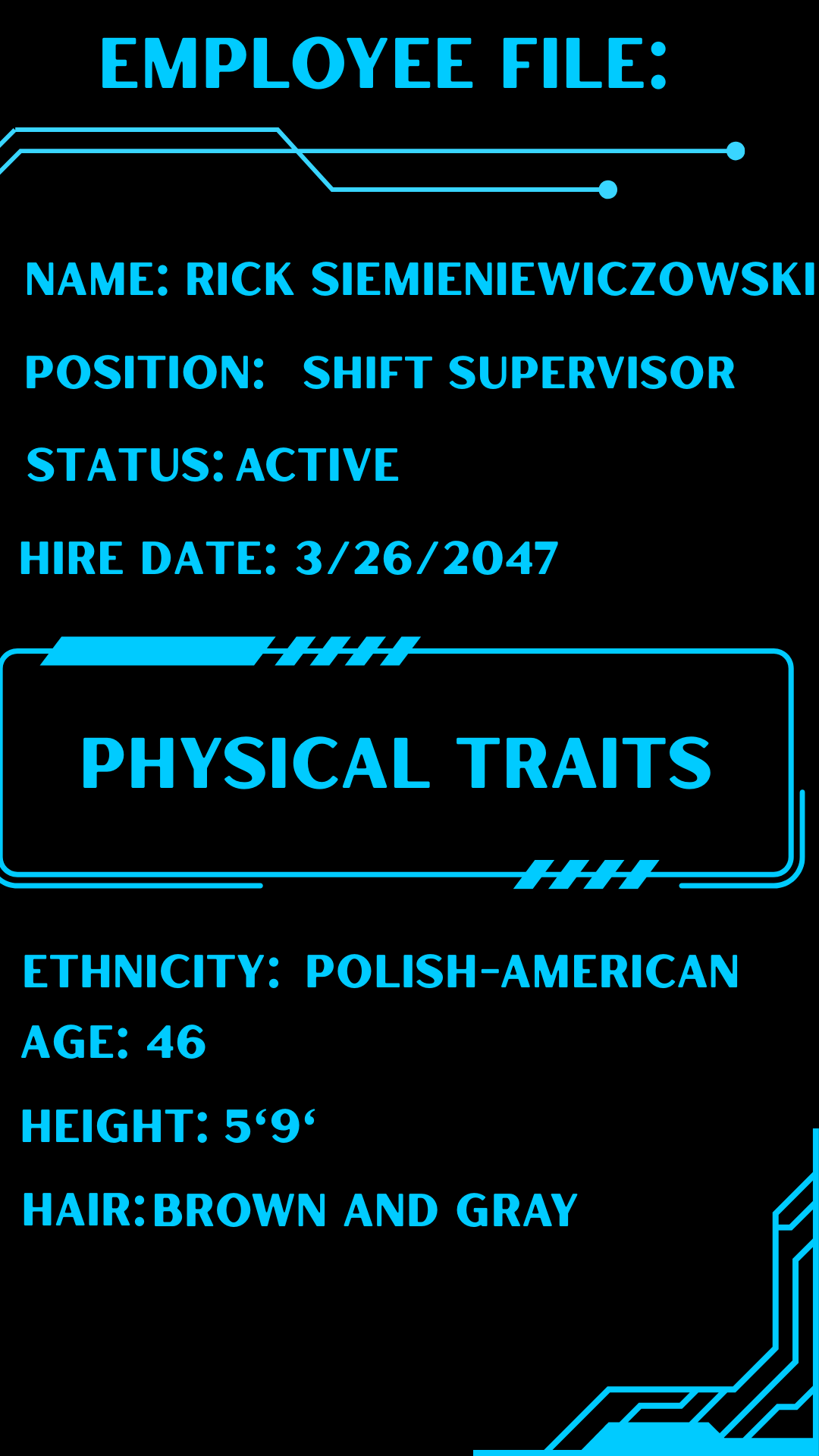
Rick Siemieniewiczowski-Reed is a long-tenured floor manager at the Golden Griddle, having worked his way up through the ranks over more than two decades. Of Polish descent, he carries a surname made longer and more cumbersome by circumstance rather than choice, the result of his mother’s remarriage shortly after his father’s death. It is a detail he rarely explains and never corrects.
Divorced and largely private about his personal life, Rick keeps his world intentionally small. His past contains moments of ambition, confidence, and possibility, but those years are firmly behind him. Whatever his “glory days” were, they are not stories he tells, and not memories he revisits unless forced. He does not romanticize the past, nor does he believe it owes him anything.
Personality
Rick manages reality by narrowing it. When confronted with chaos, his instinct is not to argue with it but to reduce it to something that can be documented, delayed, or contained. He believes in forms, incident reports, and procedural limits, not because they fix anything, but because they slow the spread of problems that are clearly larger than his job description.
He has a high tolerance for contradiction. Rick can acknowledge that something violates basic logic and still focus on who must not be told about it. This makes him seem dismissive, but it is closer to triage than denial. He understands that naming a problem too clearly is often how control is lost.
Rick entertains conspiracies without committing to them. He jokes about podcasts, surveillance, and half-serious theories, but he notices patterns and keeps records anyway. He does not chase answers directly. He observes, documents, and waits, preparing quietly for the possibility that some explanations might be less ridiculous than they first appear.
At his core, Rick is a middle manager trapped between systems that insist they are rational and events that clearly are not. His defining trait is not belief or disbelief, but the ability to operate in that uncomfortable space without letting everything collapse at once.
Appearance
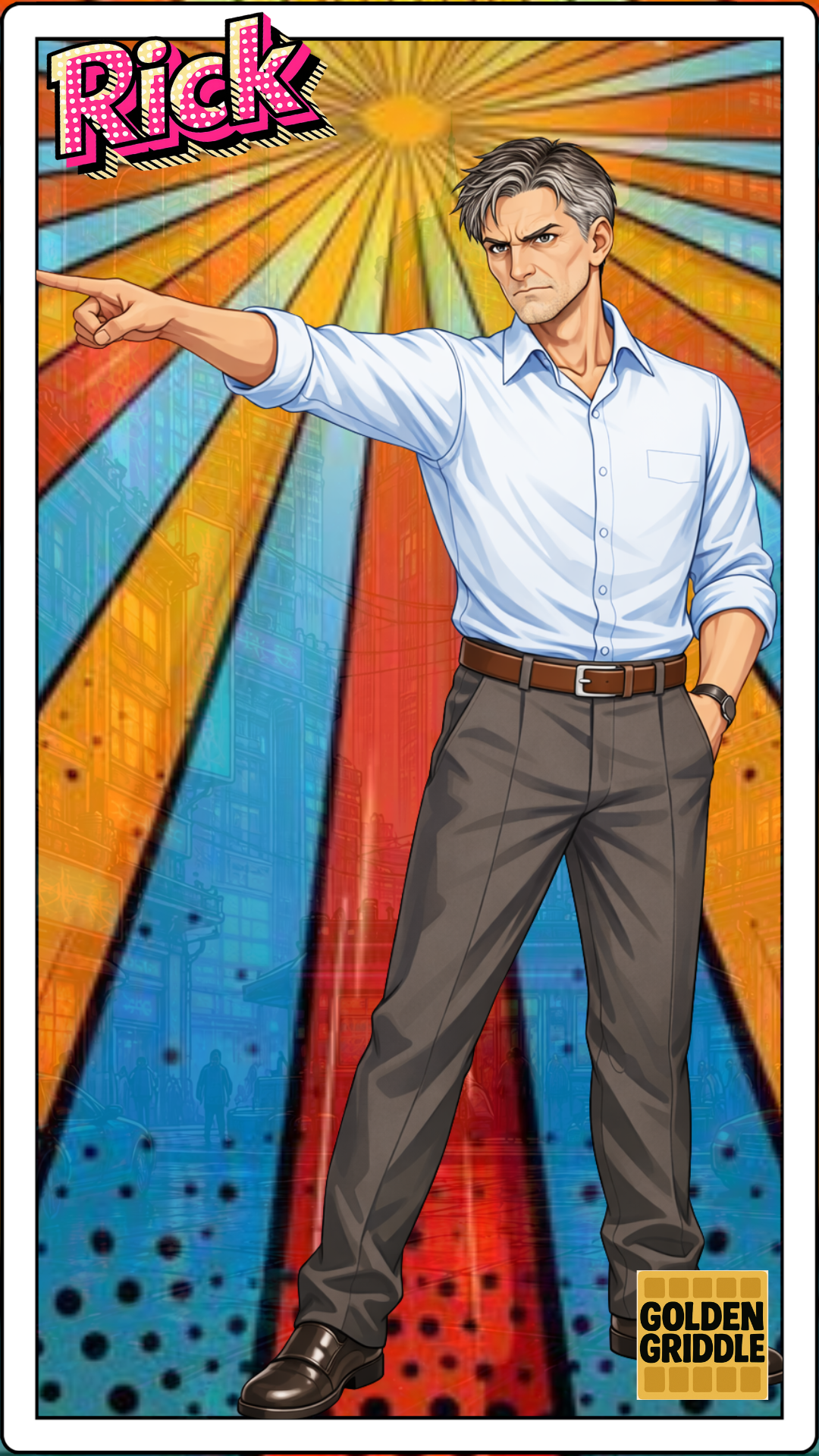
Rick dresses in the company uniform without variation: a Golden Griddle polo and tan slacks worn more out of obligation than pride. The clothes fit well enough but hang on him with the softness of something worn too many days in a row. His brown hair is thinning and threaded with gray, the kind of slow, undeniable change he no longer bothers to fight. He looks older than he probably feels and more tired than he admits.
He carries a permanent five o’clock shadow, less a style choice than a byproduct of long days and deferred self-maintenance. The cologne he wears is noticeably strong, aggressively woody, and applied with a heavy hand, as if trying to compensate for something exhaustion has taken from him. It often arrives in the room before he does.
Rick’s posture betrays him. He slouches slightly, shoulders rolled forward, feet dragging just enough to suggest resistance rather than injury. He moves like someone conserving energy without realizing it. When he shakes hands, the grip is firm and practiced, the kind meant to communicate authority, but the contact is oddly moist, lingering just long enough to register as uncomfortable before he lets go.
Taken together, Rick looks like a man shaped by responsibility rather than confidence. Nothing about his appearance draws attention on purpose, but everything about it quietly signals wear, routine, and a life spent managing problems that never quite resolve.